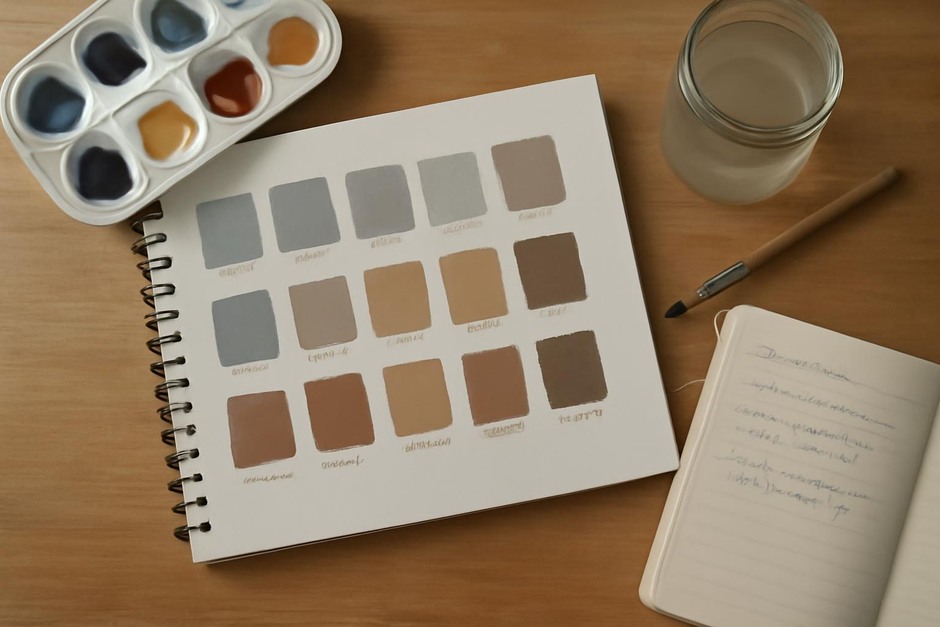
Mixing Colour with a Limited Palette
Benefits of a limited palette
A limited palette simplifies decisions, creates colour harmony, and encourages careful mixing. With fewer pigments, you learn the behaviour of each colour more quickly and develop recipes for consistent mixtures. This approach is especially useful for beginners and for projects that aim for unity rather than a photographic range of hues.
Basic palettes to start with
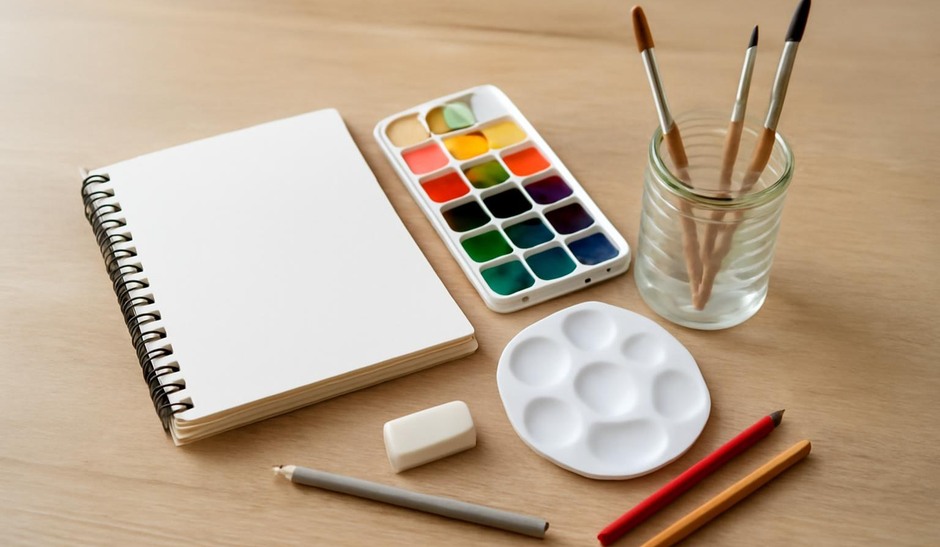
Begin with warm and cool versions of the three primaries plus white: for example, a warm red, a cool red, a warm yellow, a cool yellow, a warm blue, and a cool blue. Alternatively, select a small, efficient set such as a warm red, a warm yellow, a cool blue, and white. Each choice affects the range of mixtures you can produce.
Mixing neutrals and low-saturation colours
Mixing complementary colours produces muted tones and greys. Practice pairing opposite hues (blue and orange, red and green, yellow and purple) in small steps to see how saturation drops and the mix shifts. These muted mixes are essential for shadows, backgrounds, and subtle modelling.
Value and saturation control
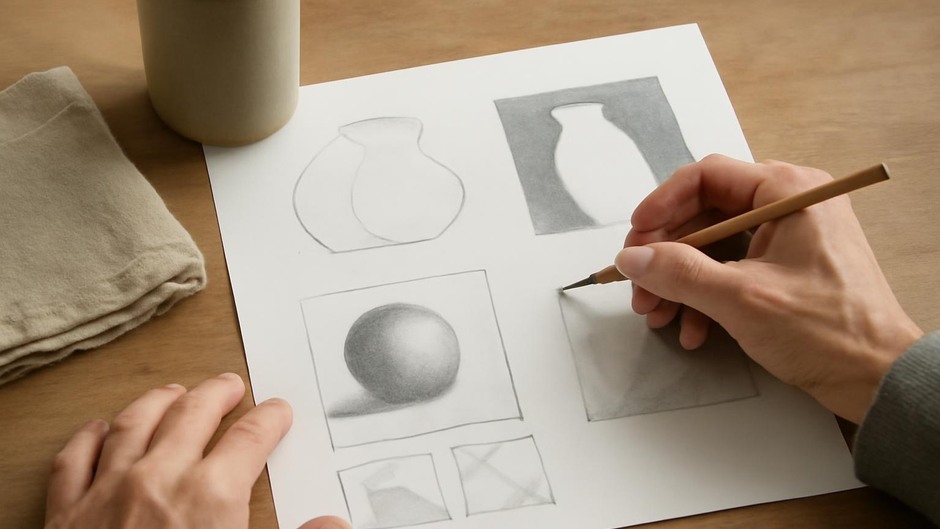
Colour has three perceptible qualities: hue, value (lightness), and saturation (intensity). When mixing, address value and saturation independently. To darken a colour while retaining its character, mix with a colour that lowers value without pushing saturation too far; black often flattens; a complementary colour can create a richer shadow.
Shadow recipes
Rather than relying on pure black, experiment with mixtures: a deep, cool shadow could be a blue mixed with a warm red and a touch of yellow to neutralise; a warm shadow might use red with a touch of blue. Keep notes of proportions so you can reproduce combinations reliably.
Practical exercises
- Create a colour chart: mix each pair of pigments across a row to see intermediate hues.
- Mix a neutral grey using three primaries in equal values, then tweak to warm or cool.
- Paint a small still life using only three pigments plus white to explore range and unity.
These exercises strengthen visual memory for mixes and help identify the limits and strengths of a given palette.
Record keeping
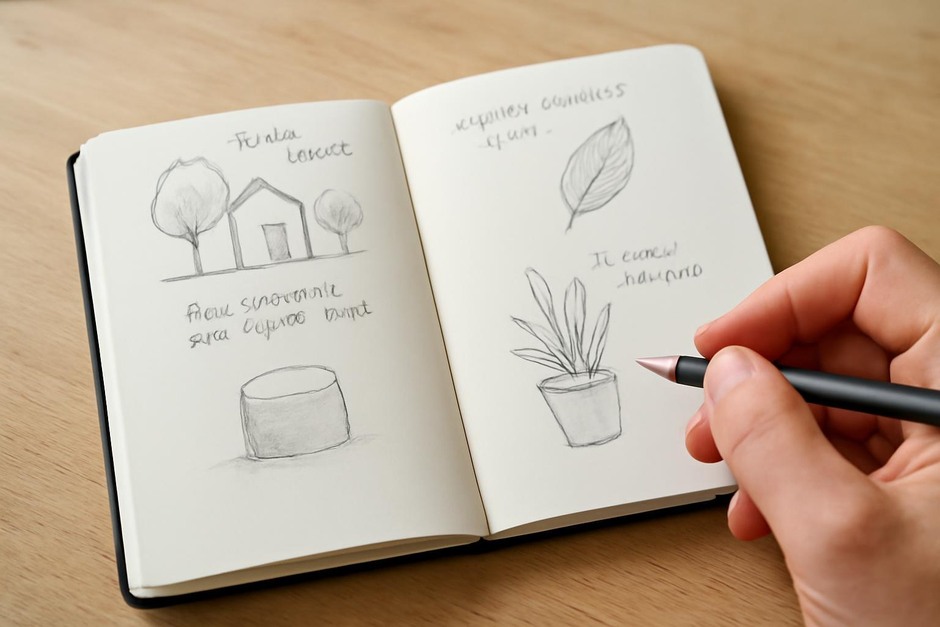
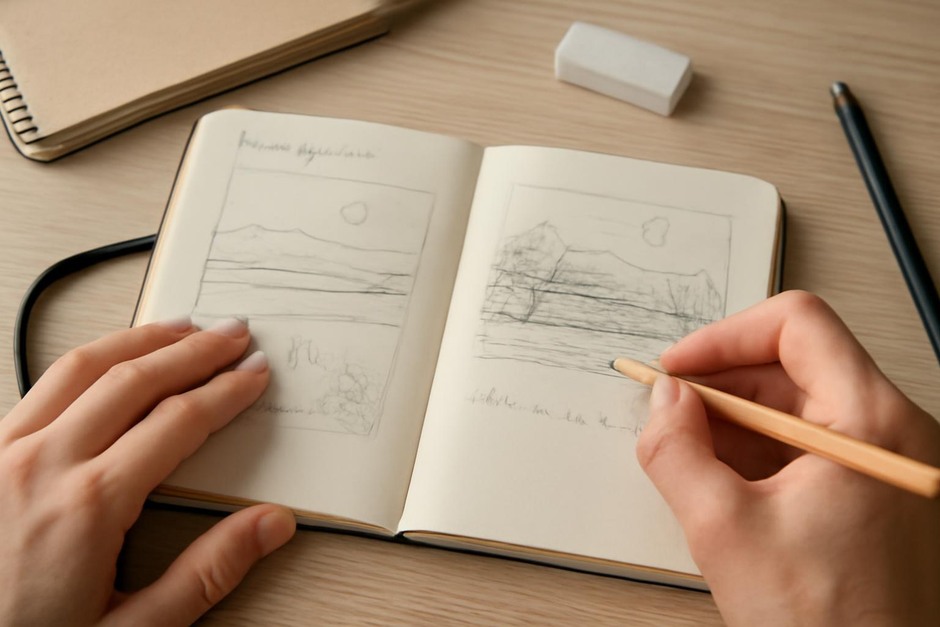
Maintain a simple notebook with patch tests: label pigments, note ratios, and record the drying behaviour. Over time, this becomes a practical reference that saves mixing guesswork and supports consistent colour decisions across multiple sessions.
Cleaning and materials care
Clean brushes and palettes promptly to avoid muddy residues that affect future mixes. For wet palettes or pans, manage moisture to maintain a predictable pigment consistency. Cleanliness helps you rely on pure pigment behaviour rather than accidental contamination.
Final guidance
A limited palette is an invitation to experiment deliberately. It trains judgement about value and temperature, encourages mixing confidence, and often yields more harmonious images. Consistent note-taking and small recipes make this approach repeatable, dependable, and deeply practical for both study and finished work.