Sketchbook Routines for Regular Practice
Why a routine matters
A sketchbook is most useful when it becomes part of an ordinary day. Regular pages collect ideas, visual notes, and small failures that later become useful. Routines lower the bar for getting started: when you know there is a short, repeatable structure to follow, it is easier to open the book and begin.
Timeboxing and page goals
Decide on short, consistent time blocks rather than focusing on finished outcomes. A daily five- or ten-minute session is more powerful than an occasional three-hour stretch. Timeboxes keep pressure low and build a steady volume of drawings.
Set modest page goals: one small study, a quick value sketch, or a single detailed observation. The point is continuity. When a routine asks for a small amount, it is easier to do more when energy allows, but the habit is sustained even on busy days.
Simple prompts and structures
- Contour drawing: look and draw the outline without lifting your pen.
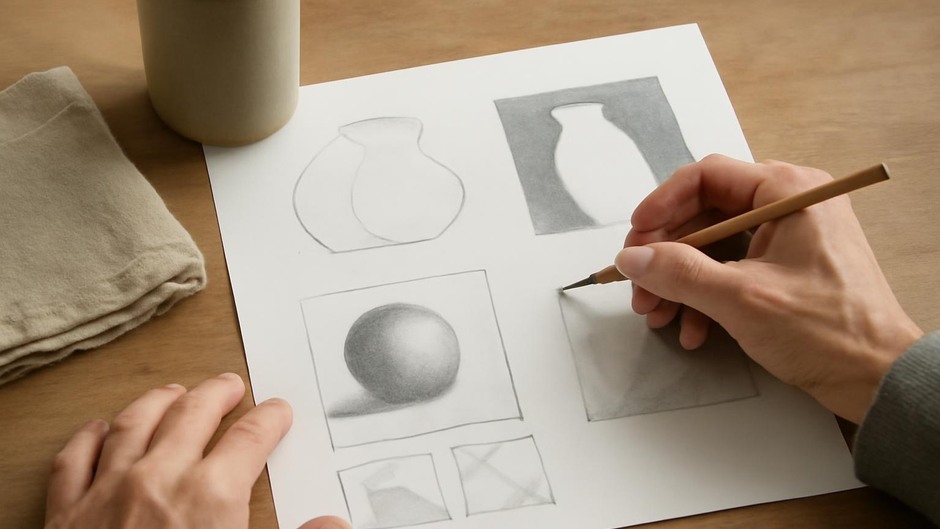
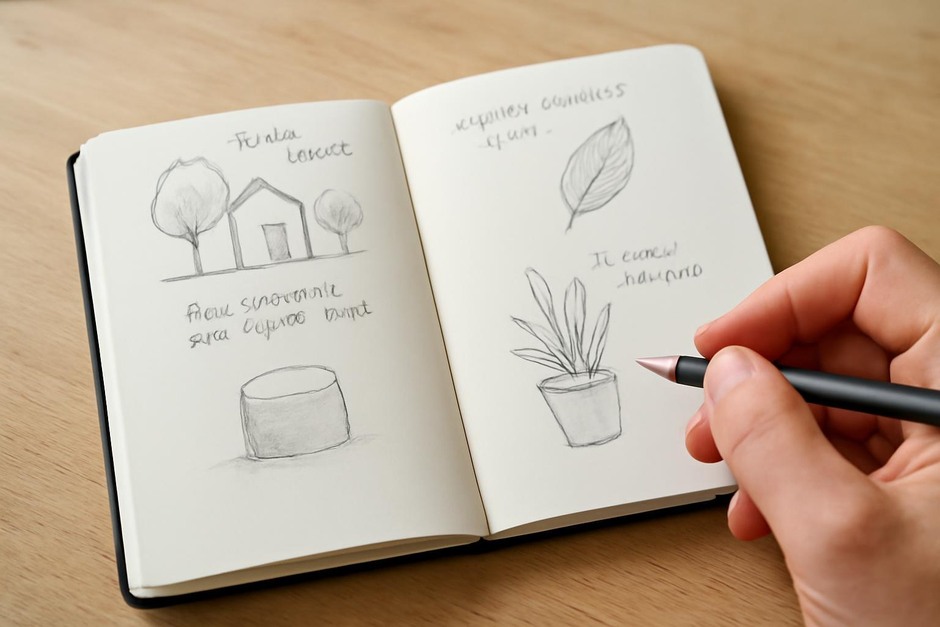
- Three-value study: block in dark, mid, and light to understand form quickly.
- Detail zoom: pick one small area and render it carefully for five minutes.
- Gesture sequence: three poses or scenes in three minutes each.
Rotate prompts through the week to keep variety while maintaining structure. A predictable rotation reduces decision fatigue and encourages skill growth across different aspects of seeing.
Page layout and habits
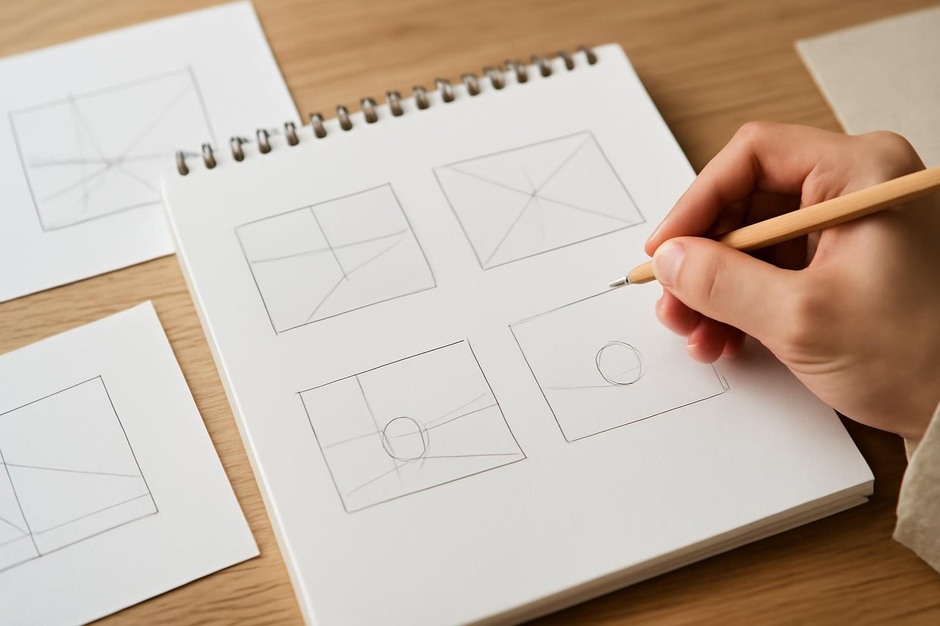
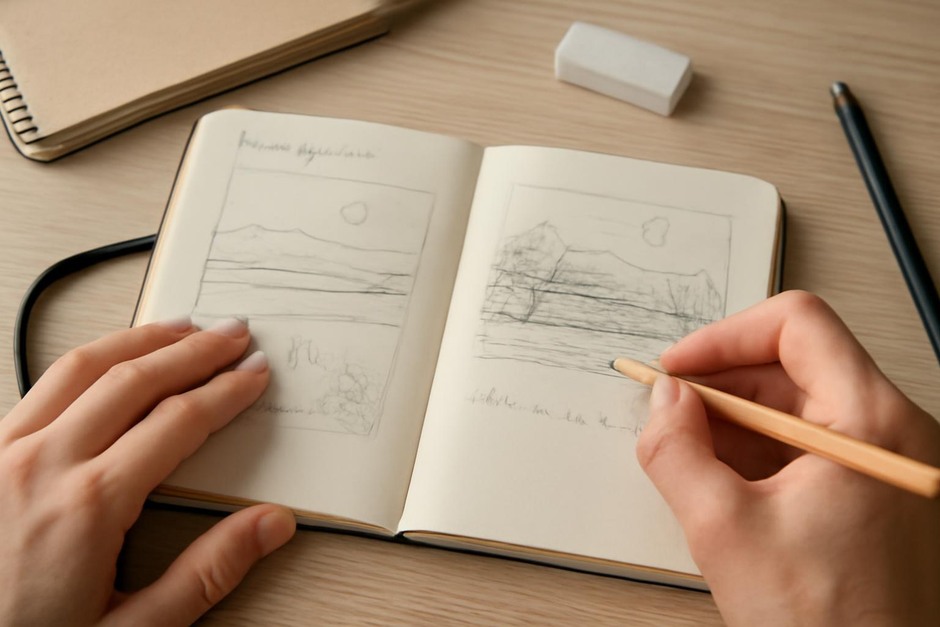
Design simple rules for your sketchbook pages. For example, use the left page for quick studies and the right page for a refined idea. Reserve a corner for date and a short note about materials or the subject. Little records like these help later when you return to past pages.
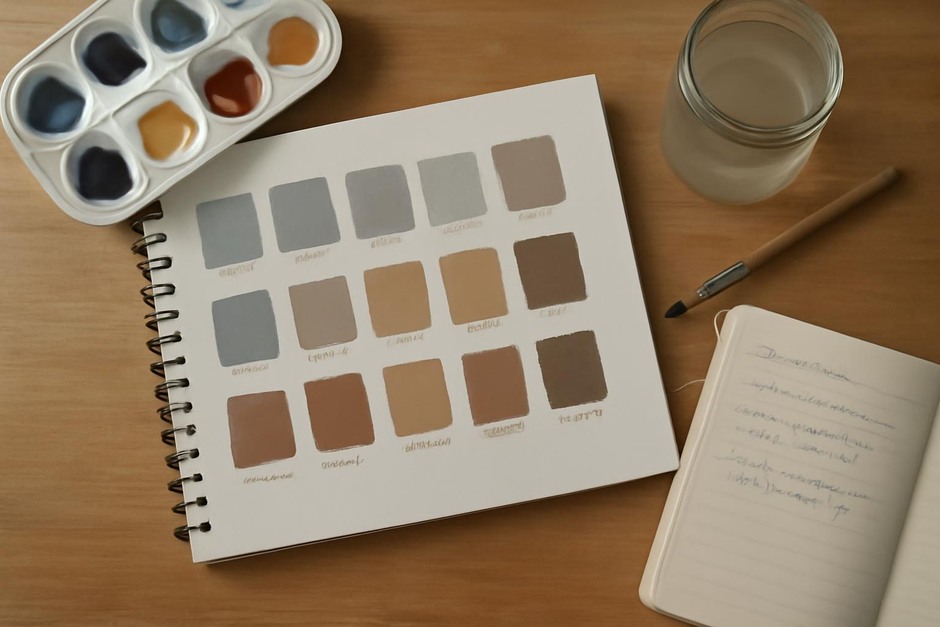
Use the margin to jot a colour idea or an observation about light. Over months, these marginal notes create a searchable trail of experiments and insights.
Review and selection
Schedule short review sessions, perhaps once a month. Flip through recent pages and choose a few sketches to develop further or to copy at a larger scale. This review ritual closes the learning loop: sketches are not merely ephemeral but seeds for practice pieces.
Practical tips
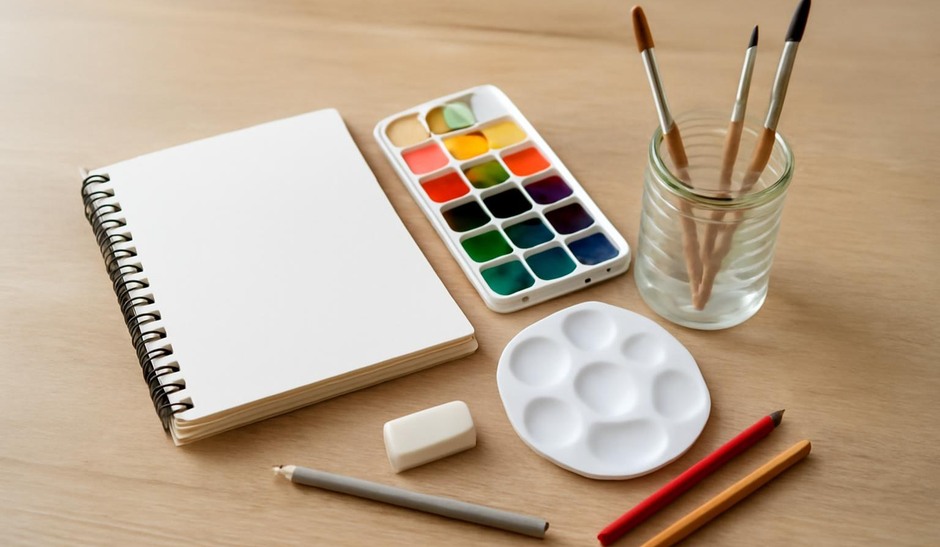
- Keep a pen or pencil with the sketchbook so starting is nearly frictionless.
- Carry a small, durable book rather than an oversized sketchbook if portability encourages use.
- Accept imperfect pages. A messy sequence often contains useful discoveries.
Final thought
Routines do not eliminate creativity; they scaffold it. When sketchbook time is regular and small, attention deepens, curiosity grows, and visual skills strengthen over time. The reward of a routine is not instant transformation but steady, accumulative improvement.