Training Observation: Seeing Like an Artist
What seeing like an artist means
Training observation is about learning to notice structure, value, and relationships rather than simply naming objects. These skills allow an artist to translate three-dimensional scenes into confident marks on paper. Improving observation is deliberate work: short, frequent exercises produce steady gains.
Contour drawing
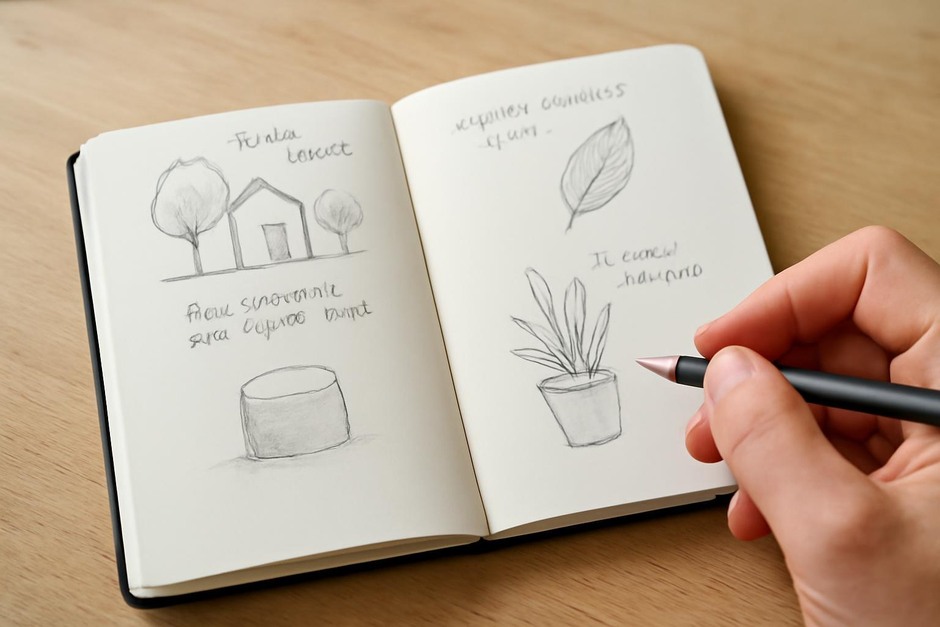
Contour drawing is a focused way to observe edges and relationships. Look steadily at the subject and draw its outline slowly, avoiding the temptation to look at the page often. This practice sharpens hand-eye coordination and increases awareness of proportions.
Negative space
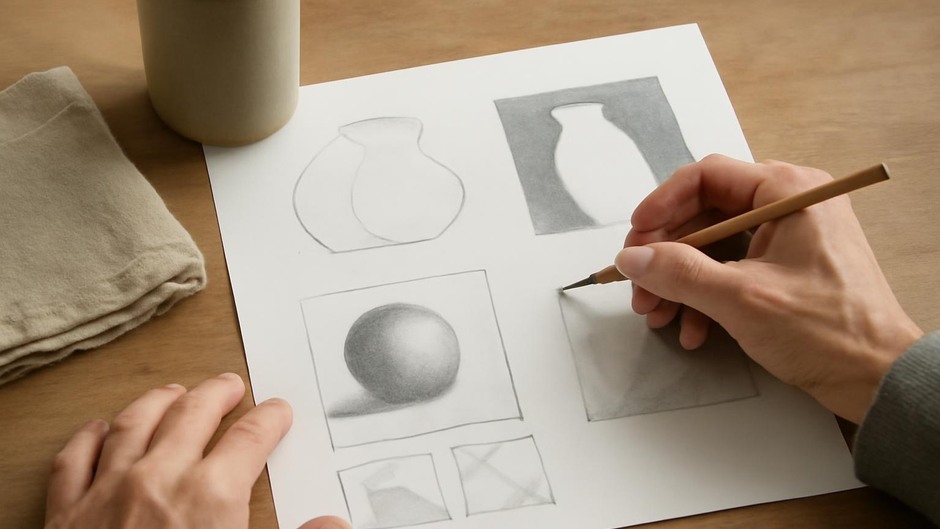
Instead of drawing the object, describe the space around it. Negative-space exercises help see shapes as interlocking forms and clarify how objects sit in relation to one another. Use a pencil to fill large negative shapes quickly; this clears confusion and highlights compositional problems early.
Value studies and simplifying tone
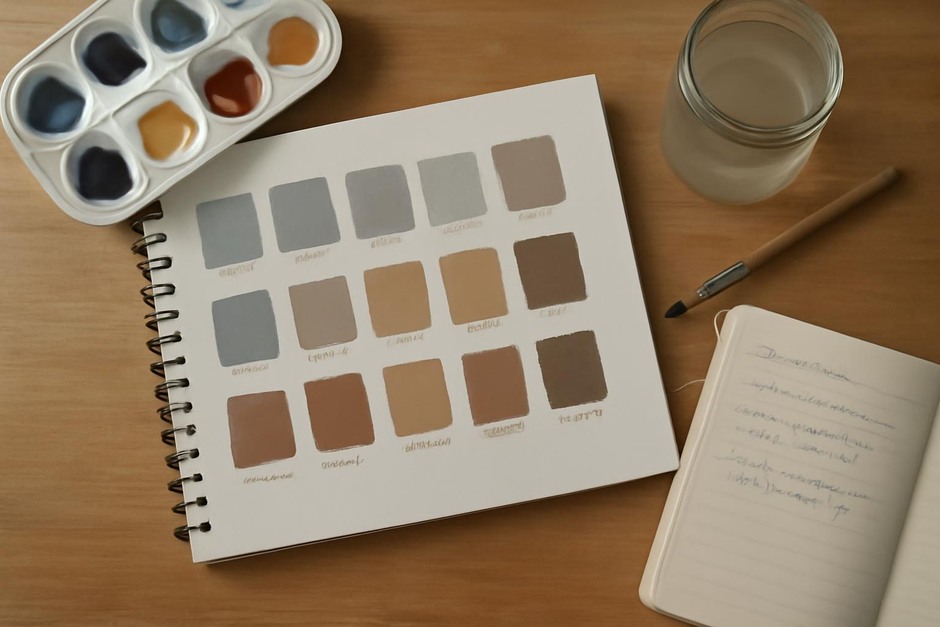
Value is the key to convincing form. Reduce a scene to three or four tones: dark, mid, light, and perhaps highlight. Working in values first removes colour distraction and reveals the scene’s structure. Small thumbnail value sketches are especially helpful before committing to a larger work.
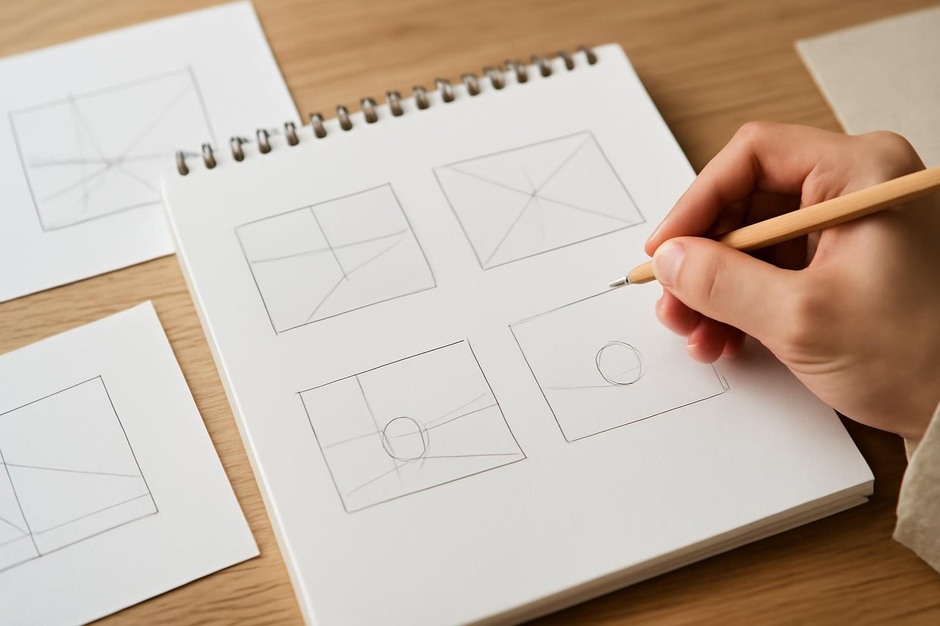
Thumbnail sketches
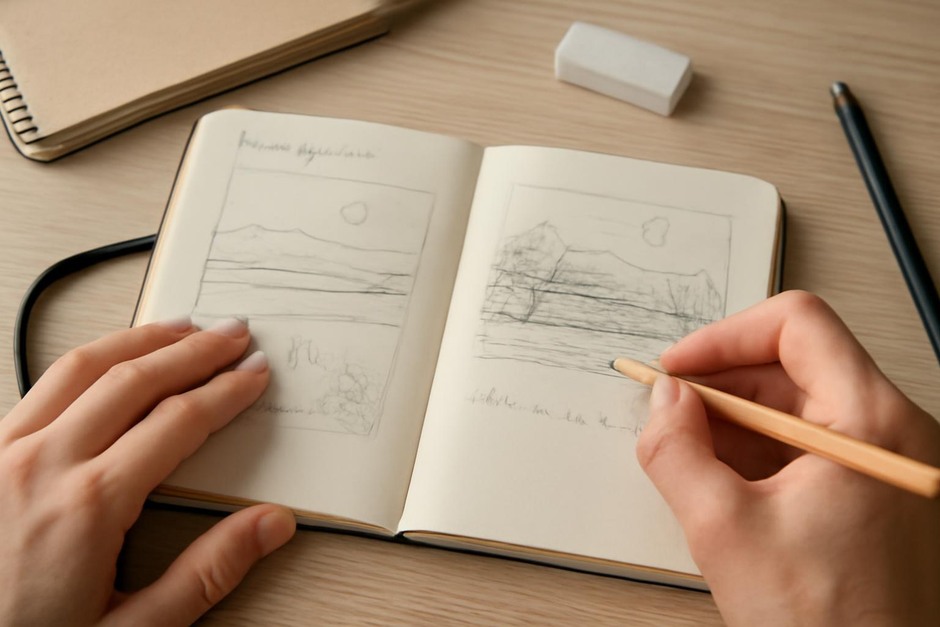
Thumbnails are tiny compositions that explore arrangements quickly. Use rapid, small sketches—no more than a few minutes each—to test different placements for the focal point, crop, and balance. This habit keeps composition decisions lightweight and experimental.
Timed observation drills
- One-minute gestures: capture the overall movement or silhouette.
- Five-minute contour or value study: focus on a single object.
- Twenty-minute combined study: build a small scene with value and a focused detail.
Timed drills teach prioritisation: when time is limited, which observations matter most? Repeating these drills makes visual shorthand more reliable.
Mindful looking and patience
Observation benefits from slowing down. Pause to describe a scene before drawing: note the largest shapes, darkest shadow, and brightest light. Naming these elements clarifies what to record with the first strokes. Patience in looking reduces guesswork and improves accuracy.
Using tools as aides, not crutches
Reference photos and devices can be useful, but they should support training rather than replace direct seeing. Practice drawing from life frequently; this trains perception of subtle shifts in angle, foreshortening, and depth that photos can flatten.
Habit and progression
Observation improves through repeated, varied practice. Rotate contour work, negative space, value studies, and thumbnails across weekly sessions. Gradual layering of these practices develops both the eye and a flexible visual vocabulary.
These methods are practical and portable. They fit short pockets of time and scale up when you have longer sessions. Over months, they reshape how you look at the world and how easily you translate that seeing into confident marks.