Keeping a Visual Diary and Turning Sketches into Finished Works
The role of a visual diary
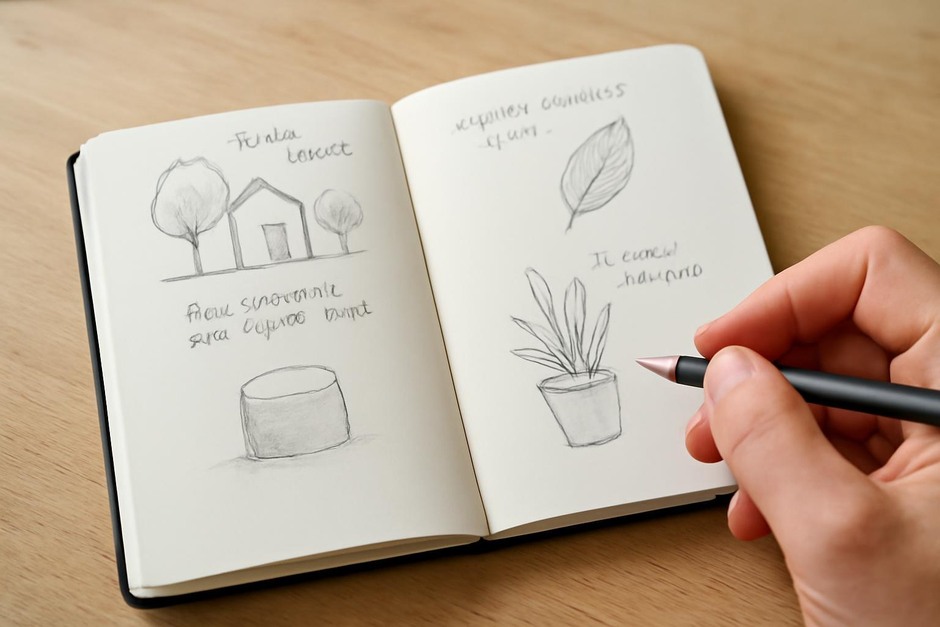
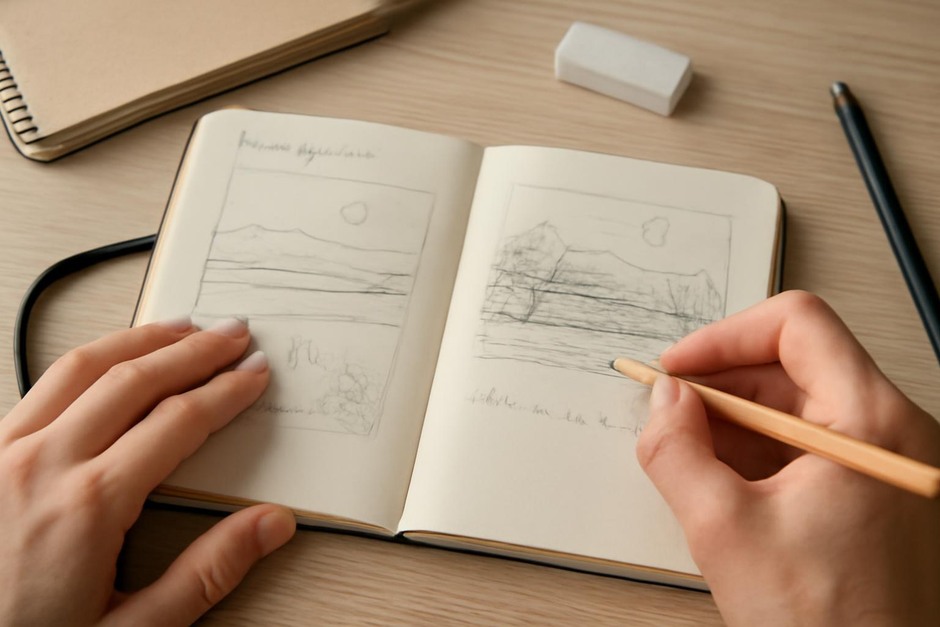
A visual diary collects observations, experiments, and fragments of idea. It is a low-stakes space where mistakes are part of the learning. Over time the diary becomes a map of interests and experiments that can be revisited to generate larger, finished work.
Structure your diary entries
Keep entries compact and informative. Date each spread and note subject, time of day, materials, and any immediate thoughts. Add a small thumbnail in the margin to summarise the page at a glance. These quiet records save time when you return to an old idea and want to pick it up quickly.
Indexing and themes
Periodically flip through the diary and mark pages that feel promising. Use simple symbols or a short list to index ideas worth exploring further. Over months, themes emerge naturally: repeated motifs, colour experiments, or compositional interests. The index helps translate this emergent material into focused projects.
Selecting sketches to develop
Choose sketches with clear strengths—a compelling movement, an unusual colour combination, or a strong tonal arrangement. Avoid developing every page; select a manageable number to refine each month. A small, deliberate set of developments leads to better learning than scattered efforts.
A measured development process
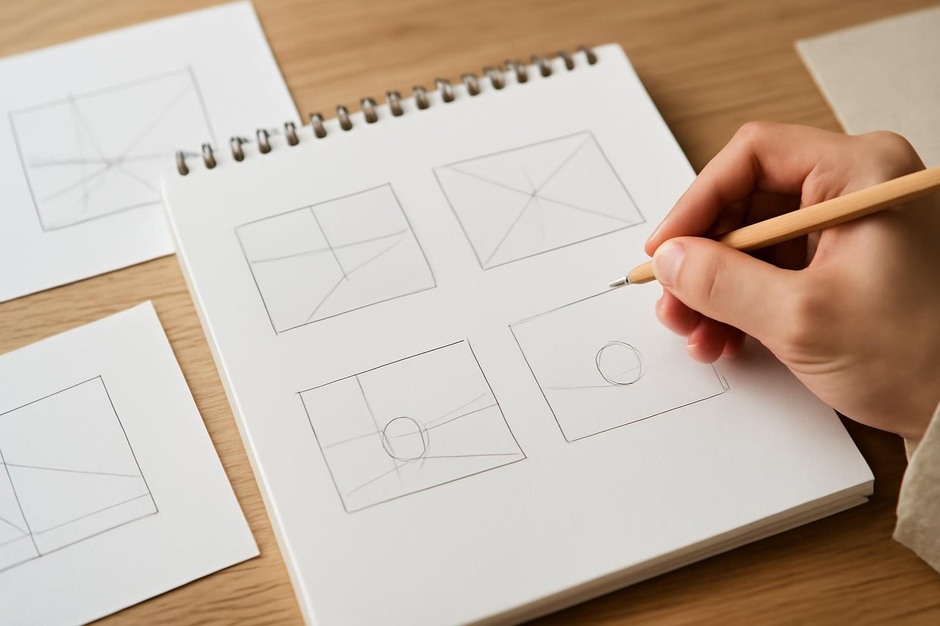
- Thumbnail: create several small compositions based on the sketch to test scale and crop.
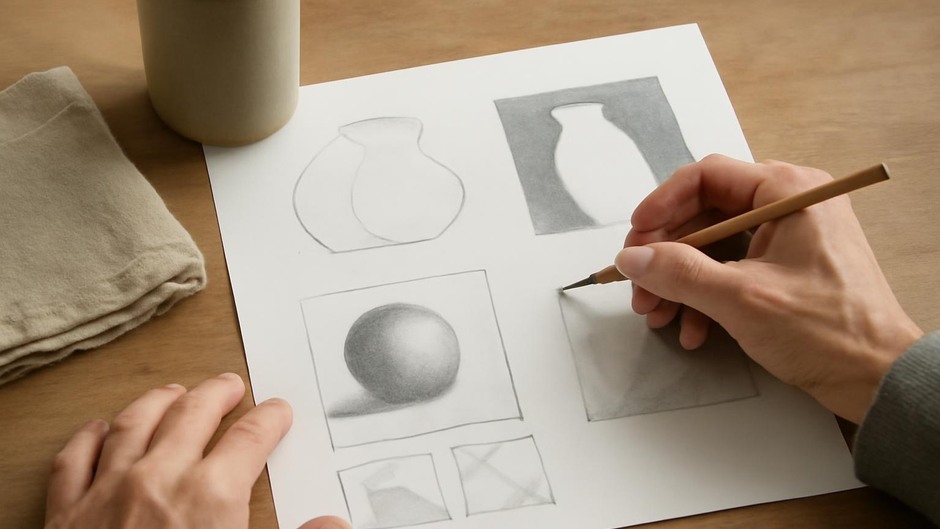
- Value study: simplify the chosen composition into a few tones to confirm the reading.
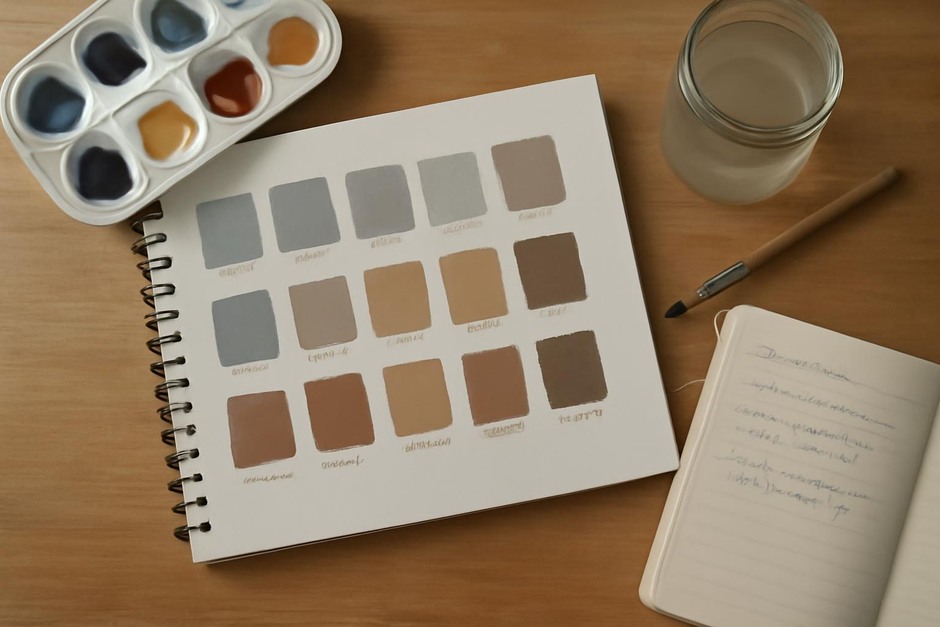
- Colour test: try small swatches or a mock-up to settle the palette.
- Scale study: transfer the idea to the intended support, considering proportion adjustments.
- Layer build: work from broad shapes to smaller details, maintaining the original energy.
This sequence preserves the spontaneity of the initial sketch while adding clarity and control as the work resolves.
Keeping qualities that matter
One common pitfall is overworking and losing the character of the original sketch. Identify the element that attracted you—the looseness of a line, a surprising colour—and protect it through the development process. Sometimes that means limiting detail or intentionally leaving areas less refined.
Documentation and reflection
Document the development with photos or small notes about decisions made. Reflect briefly on what worked and what did not. These observations inform future choices and create a practical learning record that shapes the next round of projects.
Routine and completion
Set modest goals for developing diary pages: perhaps one refined study each month. Completion is less important than learning, but finishing a few pieces reinforces the link between sketchbook work and resolved outcomes. The routine of selection, refinement, and reflection builds both skill and confidence.
Final thought
A visual diary is a quiet archive of attention. When paired with a simple, repeatable workflow for developing selected sketches, it becomes a steady source of projects and ongoing learning. The process values curiosity and iteration above perfection, encouraging work that grows from observation and mindful refinement.